 ultimate-guide
Natural Ways to Improve Sleep Quality in 2026
Table of Contents
- Why Your Current Sleep Routine Is Failing
- Sleep Hygiene Best Practices That Actually Work
- The Impact of Blue Light on Sleep and Melatonin Production
- Foods That Help You Sleep: Eat for Better Rest
- Relaxation Techniques for Insomnia and Racing Thoughts
- Physical Activity, Cortisol Levels, and Sleep Quality
- What to Avoid: Common Mistakes That Disrupt Sleep
- Conclusion: Build Your Personalized Sleep Plan
- Frequently Asked Questions
Last Updated: September 4, 2026
Most sleep advice fails because it treats symptoms rather than the underlying systems that regulate rest. If you are searching for natural ways to improve sleep quality, the real work involves aligning your biology with your environment.
Why Your Current Sleep Routine Is Failing
The biggest mistake most people make is inconsistency. You might have a perfect wind-down ritual on weeknights, only to abandon it completely on the weekend. This erratic schedule confuses your internal clock, making it harder to fall asleep and wake up naturally.
Another common failure point is treating sleep as a passive activity. Your body needs active signals that it is time to transition into rest.
Sleep Hygiene Best Practices That Actually Work
Sleep hygiene is the collection of habits and environmental factors that promote consistent, uninterrupted sleep. The core principle is simple: train your body to associate your bed with sleep, not with wakeful activities like scrolling or working.
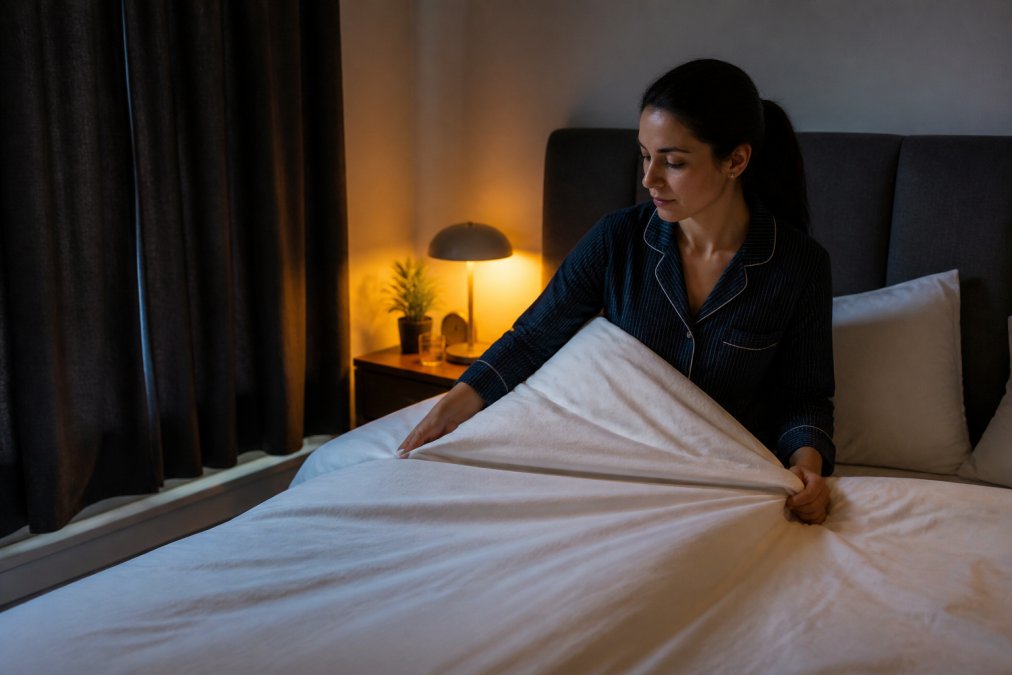
Start with consistency. Going to bed and waking up at the same time every day, including weekends, anchors your sleep-wake cycle and is one of the strongest predictors of sleep efficiency.
Master Your Circadian Rhythm and Sleep-Wake Cycle
Your circadian rhythm is an internal 24-hour clock that dictates when you feel alert and sleepy. It responds primarily to light and darkness, but also regulates cortisol and melatonin production.
To align with your rhythm, expose yourself to bright light shortly after waking. This signals to your brain that the day has started, suppressing melatonin and boosting alertness. Conversely, as evening approaches, dim the lights in your home to allow melatonin production to ramp up naturally.
Set the Ideal Room Temperature for Deep Sleep
Temperature regulation is a critical yet often overlooked component of sleep hygiene. Your core body temperature needs to drop slightly to initiate and maintain deep sleep.
Most sleep experts recommend a bedroom temperature between 60 and 67 degrees Fahrenheit for optimal rest (sleepfoundation.org). This cooler environment supports the natural drop in core temperature that occurs during sleep onset. If you tend to run warm, consider breathable bedding and a fan to facilitate airflow.
The Impact of Blue Light on Sleep and Melatonin Production
Blue light exposure in the evening is one of the most disruptive factors for modern sleep. Screens emit high levels of blue light, which tricks your brain into thinking it is still daytime, suppressing melatonin and making it harder to fall asleep.
The solution is strategic management. Stop using electronic devices at least one hour before bed. If you must use them, activate night mode settings or wear glasses that filter blue light.
Foods That Help You Sleep: Eat for Better Rest
What you eat during the day directly influences how well you sleep at night. While there is no single magic food, certain dietary patterns support the production of sleep-promoting neurotransmitters like serotonin and melatonin.
The Tryptophan and Carbohydrate Connection
Tryptophan is an essential amino acid that your body converts into serotonin, a precursor to melatonin (ods.od.nih.gov). When you consume complex carbs, your body releases insulin, which clears competing amino acids from your bloodstream, allowing more tryptophan to enter the brain. This is why a small snack combining protein and complex carbs, such as whole-grain toast with almond butter, can be more effective than protein alone.
Specific Foods with Sleep-Promoting Properties
Several foods contain nutrients that directly support sleep:
- Tart cherries and tart cherry juice: One of the few natural food sources of melatonin. A common pattern in research is that consuming tart cherry juice may modestly increase melatonin levels and improve sleep duration in some adults.
- Kiwi: Contains serotonin and antioxidants. Some preliminary studies suggest that eating two kiwifruit an hour before bed may help with sleep onset and total sleep time, though more research is needed to confirm these effects.
- Fatty fish like salmon and tuna: Rich in vitamin D and omega-3 fatty acids, both of which play a role in serotonin regulation. Higher omega-3 levels have been associated with better sleep quality in some population studies.
- Walnuts and almonds: Walnuts are a plant-based source of melatonin, while almonds provide magnesium, which supports muscle relaxation and nervous system calm.
- White rice and other high-glycemic-index carbs: When eaten four hours before bed, these may help reduce sleep onset time by increasing tryptophan availability.
Timing Your Meals for Better Sleep
Timing matters just as much as content. A heavy meal close to bedtime can cause digestive discomfort, acid reflux, and a rise in core body temperature, while going to bed hungry triggers cortisol and adrenaline. Finish your last full meal at least three hours before bed.
What to Avoid in the Evening
Beyond caffeine and alcohol, certain foods can be surprisingly disruptive:
- Spicy foods: Can trigger heartburn and raise core body temperature, both of which interfere with deep sleep.
- High-sugar desserts: Cause a rapid spike and subsequent crash in blood sugar, which can wake you in the middle of the night.
- Large amounts of fluid: While hydration is important, drinking excessive water right before bed increases the likelihood of nocturia, or waking up to urinate.
- Dark chocolate: Contains both caffeine and theobromine, a stimulant that can increase heart rate and keep you alert.
Magnesium, Chamomile, and Other Sleep-Friendly Nutrients
Several nutrients and herbs have a well-documented connection to relaxation. Magnesium regulates the GABA system, your body's primary inhibitory neurotransmitter. Low levels are associated with poorer sleep quality, and supplementation may reduce the time it takes to fall asleep, particularly in older adults.
Chamomile tea contains apigenin, an antioxidant that binds to benzodiazepine receptors in the brain and may promote drowsiness. Other herbal options include valerian root and passionflower. While generally recognized as safe for short-term use, they can interact with certain medications, so consult a healthcare provider before adding them to your routine.
For those looking to fill dietary gaps, targeted supplements can be a practical addition. When choosing a supplement, look for third-party testing certifications and avoid proprietary blends that hide individual ingredient dosages. Verity offers a curated selection of wellness essentials designed to simplify your daily routine. Supplements work best when paired with the behavioral changes discussed throughout this guide.
Relaxation Techniques for Insomnia and Racing Thoughts
When your head hits the pillow and your mind starts racing, your nervous system is still stimulated. Relaxation techniques shift your body from a "fight or flight" mode into a "rest and digest" state.
The 4-7-8 Breathing Method
The 4-7-8 method, inhale for four seconds, hold for seven, exhale for eight, activates the parasympathetic nervous system, lowering your heart rate and signaling that it is safe to sleep. The extended exhale stimulates the vagus nerve, which triggers the relaxation response. Practice this for four full cycles when you first get into bed.
Progressive Muscle Relaxation
Progressive muscle relaxation (PMR), developed by physician Edmund Jacobson in the 1920s, involves systematically tensing and releasing different muscle groups. Consciously relaxing your muscles sends feedback signals to your brain that reduce overall arousal.
To practice PMR:
- Start with your feet. Tense the muscles as tightly as you can for five seconds, then release completely and notice the sensation of relaxation for 15 seconds.
- Move to your calves, thighs, glutes, abdomen, hands, arms, shoulders, neck, and face.
- For each group, inhale as you tense and exhale as you release.
- Finish with your facial muscles, including your jaw and forehead, where many people unconsciously hold tension.
A full PMR session takes about 10 to 15 minutes. Many guided audio versions are available, but you can practice it silently once you learn the sequence.
Cognitive Shuffling for Racing Thoughts
Cognitive shuffling interrupts mental chatter by engaging your brain in a low-effort, non-linear task that mimics the random neural activity of sleep onset. Pick a neutral word, then think of as many words as you can that begin with each letter. The goal is not to complete the task but to let your mind drift into sleep.
Guided Imagery and Visualization
Guided imagery involves mentally transporting yourself to a calm, peaceful setting, redirecting your attention away from anxious thoughts and toward sensory details. Choose a memory or an imagined place, a quiet beach, a forest trail, a cozy cabin, and engage all five senses.
A Simple Evening Wind-Down Ritual
Creating a consistent evening ritual is one of the most powerful ways to signal that the day is over. It doesn't need to be long or complicated; it just needs to be repeatable.
A simple wind-down might look like this:
- Dim the lights in your living space an hour before bed.
- Spend 10 minutes stretching or doing gentle yoga, focusing on slow movements that release tension in your hips and shoulders.
- Write down any lingering thoughts in a journal to clear your mind. If you tend to worry about tomorrow, try a "brain dump" where you list everything on your mind, then close the notebook and tell yourself it will be there in the morning.
- Drink a cup of non-caffeinated herbal tea, such as chamomile or passionflower.
- Read a physical book or listen to calm music for 15 minutes. Choose something light and enjoyable, not a thriller or work-related material.
Physical Activity, Cortisol Levels, and Sleep Quality
Regular physical activity is one of the most effective natural ways to improve sleep quality. Exercise reduces stress and anxiety by lowering cortisol levels. However, the timing of your workout matters significantly.
Vigorous exercise too close to bedtime can raise your core temperature and adrenaline levels, making it harder to fall asleep. Aim to finish intense workouts at least three hours before bed. Morning or early afternoon exercise tends to be best for reinforcing a healthy circadian rhythm.
What to Avoid: Common Mistakes That Disrupt Sleep
Even with a perfect routine, certain habits can undermine your efforts. Caffeine is a primary culprit, with a half-life of roughly five to six hours, a cup of coffee at 3 PM can still leave significant caffeine circulating at 9 PM (the FDA).
Alcohol is another common saboteur: while it may help you fall asleep faster, it fragments your sleep architecture later in the night. Similarly, long daytime naps reduce your sleep drive. If you need to nap, keep it under 30 minutes and schedule it before 3 PM.
Conclusion: Build Your Personalized Sleep Plan
Improving your sleep is not about perfection; it is about consistency and listening to your body. The strategies outlined here are most effective when combined into a personalized plan. Start by picking one or two changes you can sustain, then build from there.
If you are looking to support your sleep with high-quality supplementation, Verity offers a range of wellness essentials designed to fit seamlessly into your nightly routine. Our products are crafted with intention to support your vitality, helping you address the nutritional gaps that may be holding your rest back. Get started with Verity and build a sleep routine that truly works for you.
Frequently Asked Questions
What is the most effective natural way to improve sleep quality?
The most effective approach combines a consistent sleep schedule with proper light exposure. Going to bed and waking at the same time every day, even on weekends, anchors your circadian rhythm. Pair that with dimming lights an hour before bed to support melatonin production. Most adults also benefit from keeping the bedroom cool, around 65 degrees Fahrenheit, and reserving the bed only for sleep.
How does the 3-3-3 rule for sleep work?
The 3-3-3 rule is a simple framework for winding down. Three hours before bed, stop eating heavy meals and limit alcohol. Two hours before bed, finish work and shut down screens to reduce blue light exposure. One hour before bed, start a relaxation routine like reading, gentle stretching, or meditation. This structure gradually lowers cortisol levels and signals your body that sleep is approaching.
What foods help you sleep naturally?
Foods rich in magnesium, tryptophan, and melatonin support sleep onset. Tart cherries, kiwi, and walnuts contain natural melatonin. Almonds and pumpkin seeds provide magnesium, which relaxes muscles and calms the nervous system. Chamomile tea is a gentle option that many find soothing before bed. Keep portions light: a heavy meal close to bedtime raises core temperature and disrupts sleep quality.
How long does it take to see results from better sleep hygiene?
Most people notice improvements within one to two weeks of consistent changes. Sleep latency, the time it takes to fall asleep, often improves first. Deeper changes to sleep architecture, such as spending more time in restorative stages, may take three to four weeks. The key is consistency: practicing the same bedtime routine nightly reinforces your sleep-wake cycle and helps your body adjust.
Note: This content is for informational purposes only and is not a substitute for professional medical advice. Always consult with a healthcare provider before starting any new supplement regimen, especially if you have underlying health conditions.